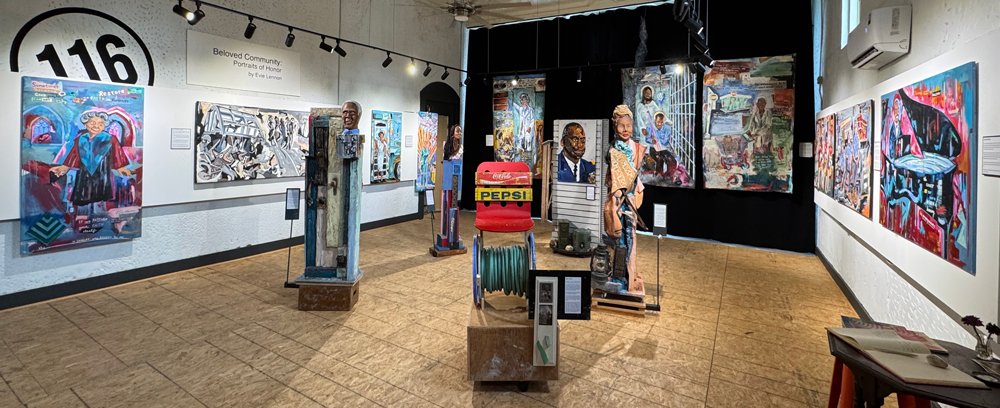
Beloved Community: Portraits of Honor - The Collection
Photos courtesy of Byron Collins
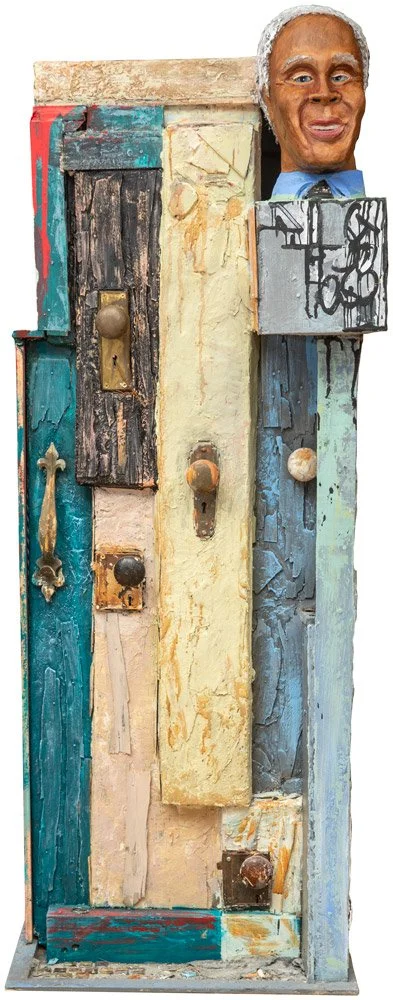
The Good Steward
At the age of 94 Alvin Brooks continues to open doors for various disenfranchised groups. After resigning from his work as a police officer and detective he also set a record in shutting the doors of crack houses when he established the AdHoc Group Against Crime. George H. W. Bush appointed him to the National Drug Advisory Council and named him one of the “Thousand Points of Light.”
Alvin Brooks served on numerous influential boards across education, civil rights, and public health. His legacy was honored by Rockhurst University through the Alvin Brooks Center for Faith-Justice. His exemplary life is also documented in a film by Kevin Willmott and in his memoir Binding Us Together.
"I will give him the key to the house of David—the highest position in the royal court. When he opens doors, no one will be able to close them; when he closes doors, no one will be able to open them." Isaiah 22:22
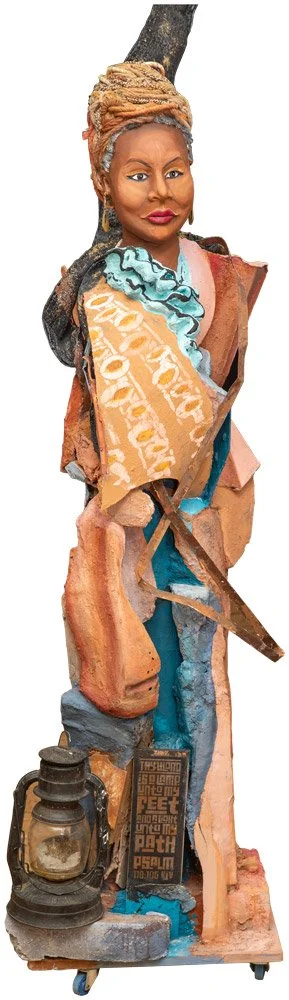
Order My Steps
“Order My Steps in Your Word” is a gospel classic that asks God to guide our actions, words, and purpose. If there was anyone who lived those words, it was my former principal, Dr. Jennifer Malone.
I only had the privilege of working with her for two of her forty years as an educator, but I often walked the track with her after school, watching someone whose faith and leadership aligned.
When derogatory remarks are made about the intelligence or competence of Black women like Michelle Obama or Ketanji Brown Jackson, I think about leaders like Dr. Malone. Comments about public figures don’t stay contained to those individuals—they shape how people perceive entire groups. My experience tells a different story.
She ran a school affiliated with Children’s Mercy Hospital, essentially being a hospital administrator and school principal rolled into one. Not once did I see her harried or agitated, and she continuously checked in on her students and staff in a cheerful, fun, and caring fashion.
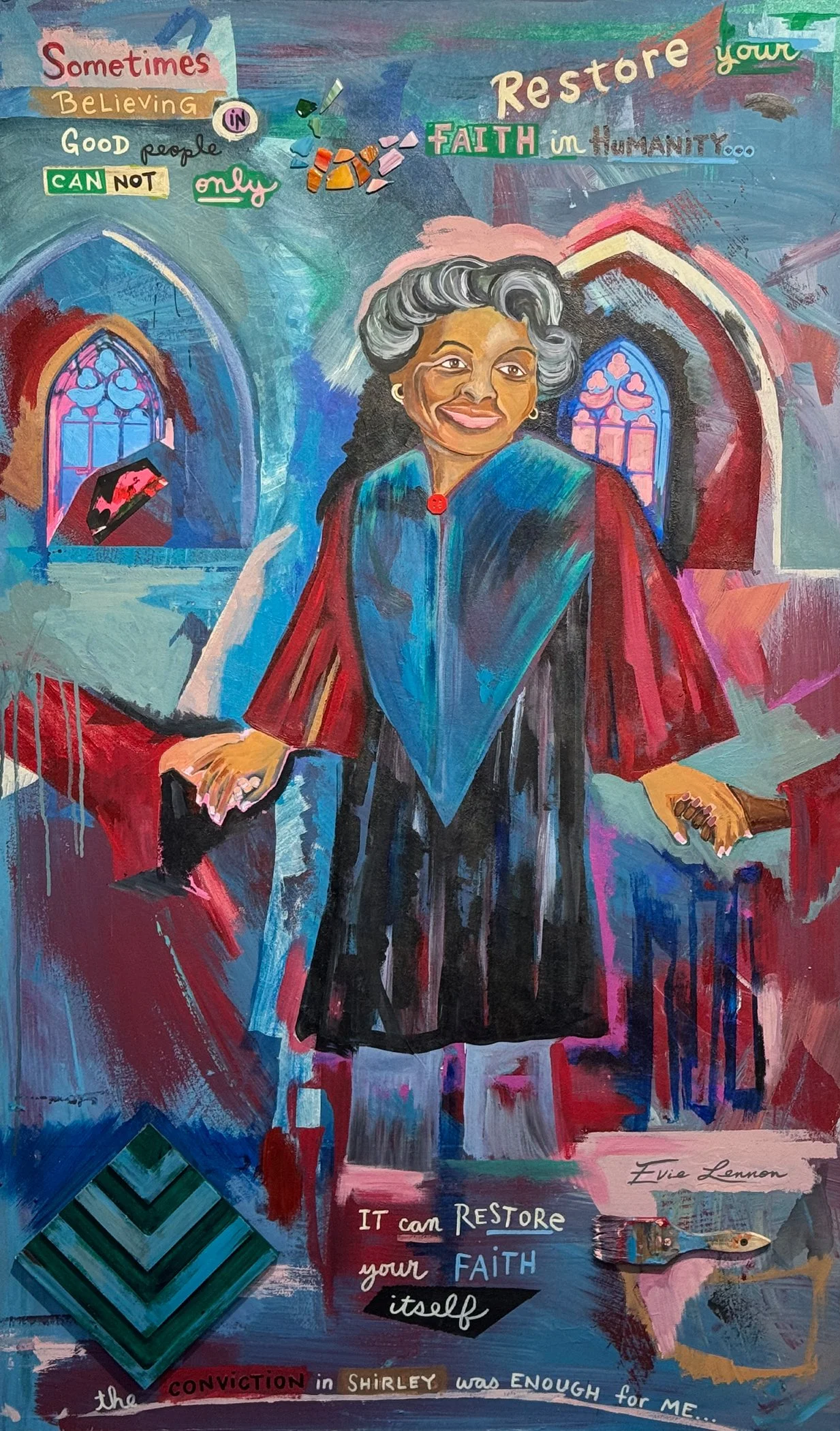
Welcome Into This Place
For a while it was hard to pray because White Christian Nationalists who called themselves believers were the opposite of the nuns who lived the folk song lyrics they taught us about social justice. Even though I believe God depends on us to be instruments of His peace, mercy, and grandeur, I was so disenchanted by hypocrisy, it affected me spiritually.
Remembering my fellow choir member, Shirley Smith, reminded me that sometimes the people you believe in can not only restore your faith in humanity, they can restore your faith altogether. I was going through a similar period of being jaded when I met Shirley. The conviction in her eyes was enough. She showed me that God lived in the love between us in our prayer circle before choir practice.
If Shirley was next to me right now, I would tell her she must have the cleanest heart in America. She would get the joke. What I wouldn’t do for one of her hugs right now. She was as real as real gets.
Named after the hymn, by Dr. E. Dewey Smith, I hope this painting and this exhibit create an interior space where the ideal of faith has not been completely hijacked and sullied by those who use religion as a weapon of division and destruction. I continue to draw strength from standing in a circle of role models who, to steal a line from Michael Dukakis, enriched and ennobled me.

September 13, 1950 - August 28, 1984
Civil rights and disability rights activist
The 1977 Section 504 Sit-In was one of the longest nonviolent occupations of a federal building in U.S. history. Disabled activists occupied government offices for nearly a month demanding enforcement of Section 504, a law banning discrimination against disabled people.
In an attempt to crush the protest, government officials cut telephone lines, the water supply, and limited food.
Brad Lomax became a lifeline, drawing
on his roots in both disability justice and the Black Panther movement, he built alliances that sustained the protesters by providing water, beverages, and hot meals.
Protesters were able to persist because of Lomax and won landmark protections. That victory built the disability rights movement, laying the groundwork for later actions—including the 1990 Capitol Crawl, when activists abandoned their wheelchairs and mobility devices to crawl up the steps of the U.S. Capitol, dramatizing the barriers disabled Americans faced. This helped push passage of the Americans with Disabilities Act.
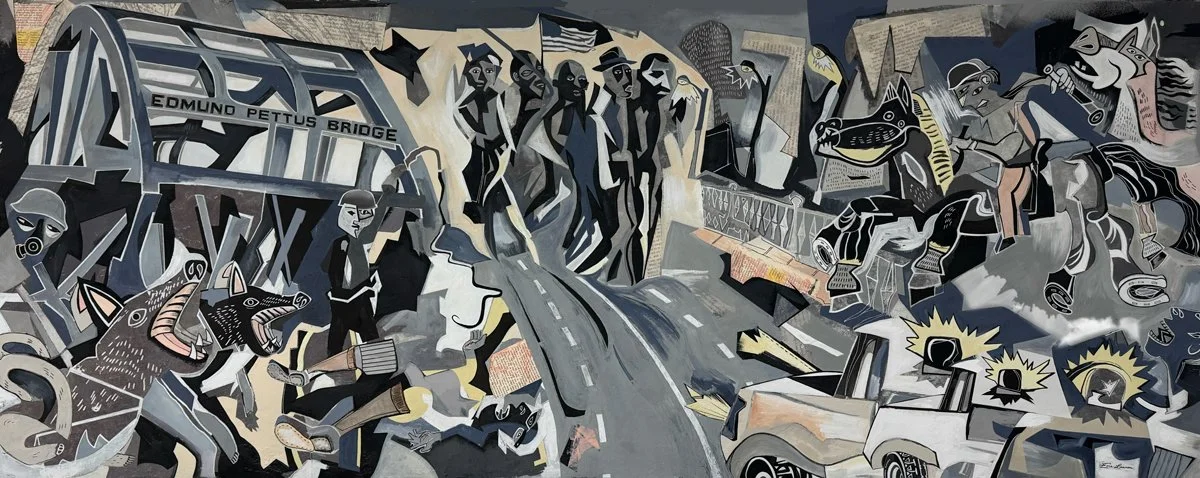
Selma: Variation of Guernica
Reflections on the march for voting rights from Selma, Al in 1965.
Like Picasso’s Guernica, which was commissioned to capture the horrors of the Spanish Civil War, I painted Selma to bear witness to a defining struggle for justice. I chose the subject long before I imagined that hard-won voting rights would once again come under threat.
I wanted the central figures to tell a different American story—one of fearless Black patriots deserving the same honor traditionally reserved for scenes such as George Washington crossing the Delaware or the flag and drum bearers celebrated during the Bicentennial. These marchers were not only demanding their rights as citizens; they were expanding the promise of democracy itself.
The fractured angles of Cubism allowed me to transform the pathway across the Edmund Pettus Bridge into a conveyor belt carrying the freedom fighters toward the violence that awaited them—savage police dogs, choking tear gas, and stinging bullwhips. The visual language of Cubism mirrors the chaos, tension, and inevitability of that confrontation.
I first painted Selma more than twenty years ago when Martin Luther King Jr.’s writings came to Atlanta, where I was living at the time. Before beginning the work, I asked my friend Hellen to pose for one of the figures. Only later did I discover that she had actually participated in the march. What began as artistic interpretation became a personal connection to history itself.
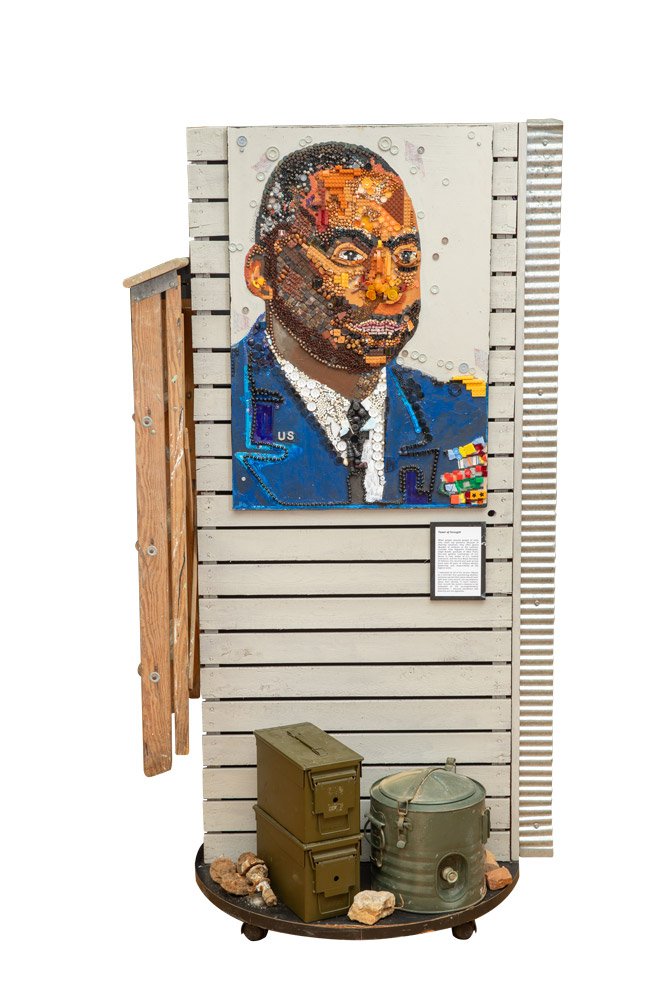
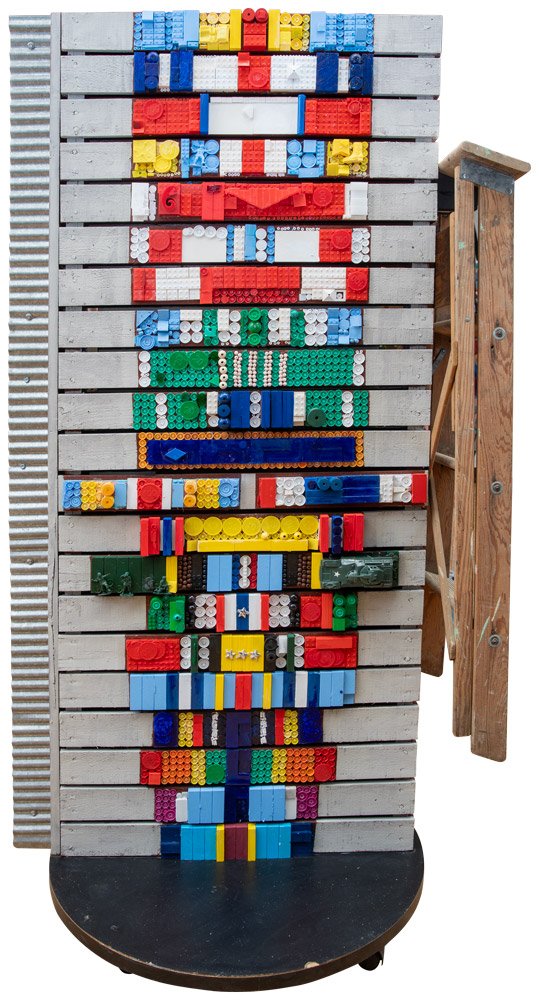
Tower of Strength
When people assume people of color only reach top positions because of diversity initiatives, they often ignore decades of evidence to the contrary. Consider Pete Hegseth’s Predecessor, Lloyd Austin: graduate of West Point, four-star general, commander of U.S. forces in Iraq, leader of U.S. Central Command, and the first Black Secretary of Defense. His résumé was built across more than 40 years of military service, leadership, and responsibility at the highest levels.
I replicated all 24 of his service ribbons as a reminder that questioning whether someone earned their place should start with their track record, not assumptions about their identity. If merit matters, then records like Austin’s deserve to be evaluated on the accomplishments themselves — because excellence and diversity are not opposites.
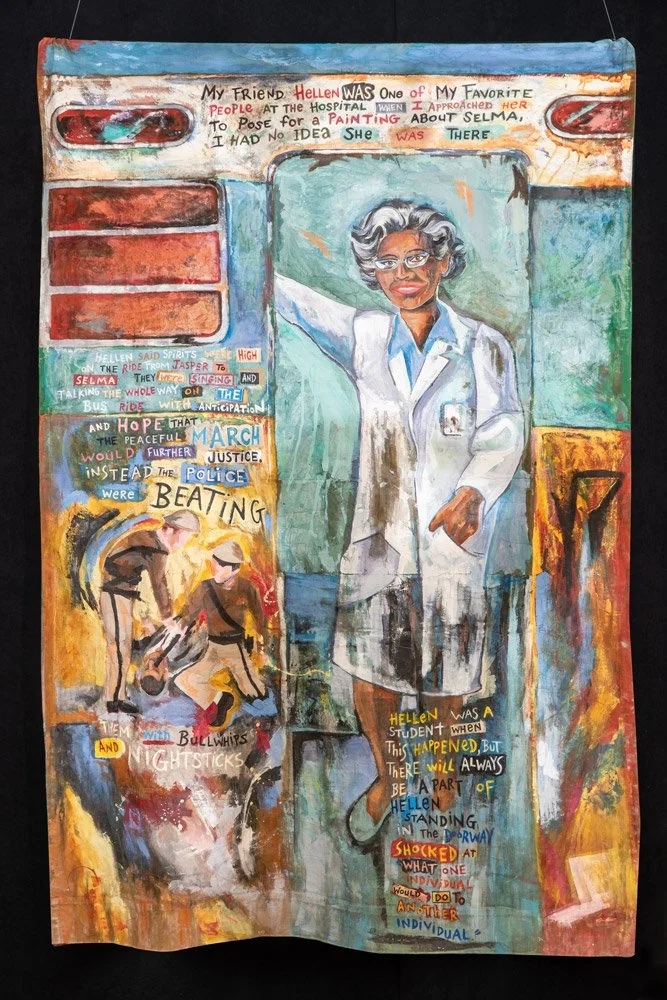
Bearing Witness
In preparing for this upcoming show and reviewing my older work and journals, I realized how much I have always been drawn to faces as a subject. I first painted Selma when Dr. King’s large body of writing was brought to Atlanta’s History Museum where I lived. When I asked Hellen to pose for me in 2006, I never imagined that voting rights would remain such a critical issue in the United States twenty years later.
I first met Hellen while working at the hospital, where I was immediately drawn to her warm eyes and broad smile, and found writing I did back then about her beautiful face.
I have long held the hope that if people could truly see the beauty etched into others' faces, racism would cease to exist. With this in mind, I decided to ask Hellen to pose for a painting about Selma. I initially hesitated to approach her because I couldn't bear the thought of depicting her in a situation where she might face violence or tear gas. When I finally found the courage to speak with her, I learned that Hellen had actually been at Selma.
I continued to see Hellen for many years after leaving the hospital due to my daughter’s frequent medical stays. I never saw her again without feeling a profound sense of marvel and reverence for what she lived through. Eventually, amidst my daughter’s health battles, Hellen retired, and I was unable to track her down.
Decades later, the barriers the march sought to tear down are still being rebuilt. I often wonder if Hellen died in a nation still waiting on freedom or if she is still looks out her doorway trying to understand the hate.
Living Sanctuary
The nuns and priests who taught me in the 1960s and 1970s emphasized social justice and the Catholic belief that ordinary people are called to do extraordinary things through love, service, and compassion. They taught us to be God’s hands and feet in the world.
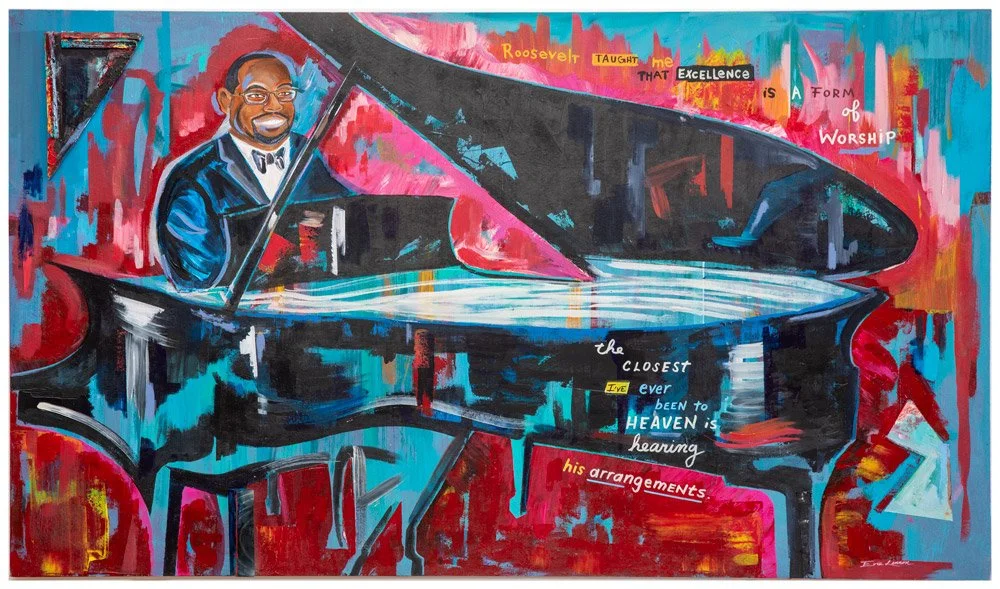
My former choir director, Roosevelt Escalante Jr., embodies that calling. Through decades of composing, arranging, and teaching music, he has dedicated himself to excellence that uplifts and inspires people of every background. His gift brings joy and touches the spirit.
The title comes from the hymn Sanctuary by Randy Scruggs and John W. Thompson: “Lord, prepare me to be a sanctuary, pure and holy, tried and true.”
Roosevelt had us sing it often and I know we learned more than the words from watching him.
Taking a Knee
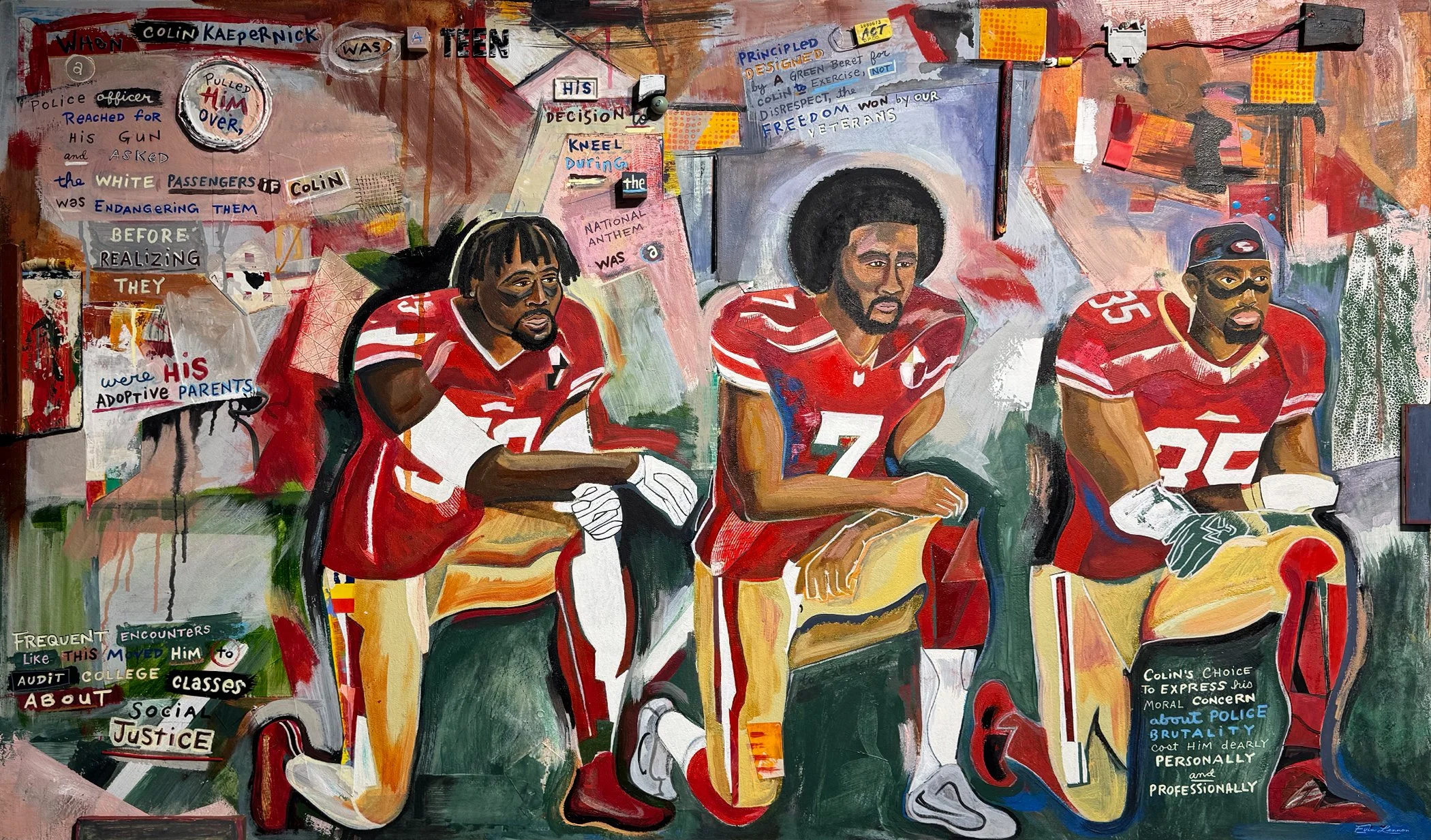
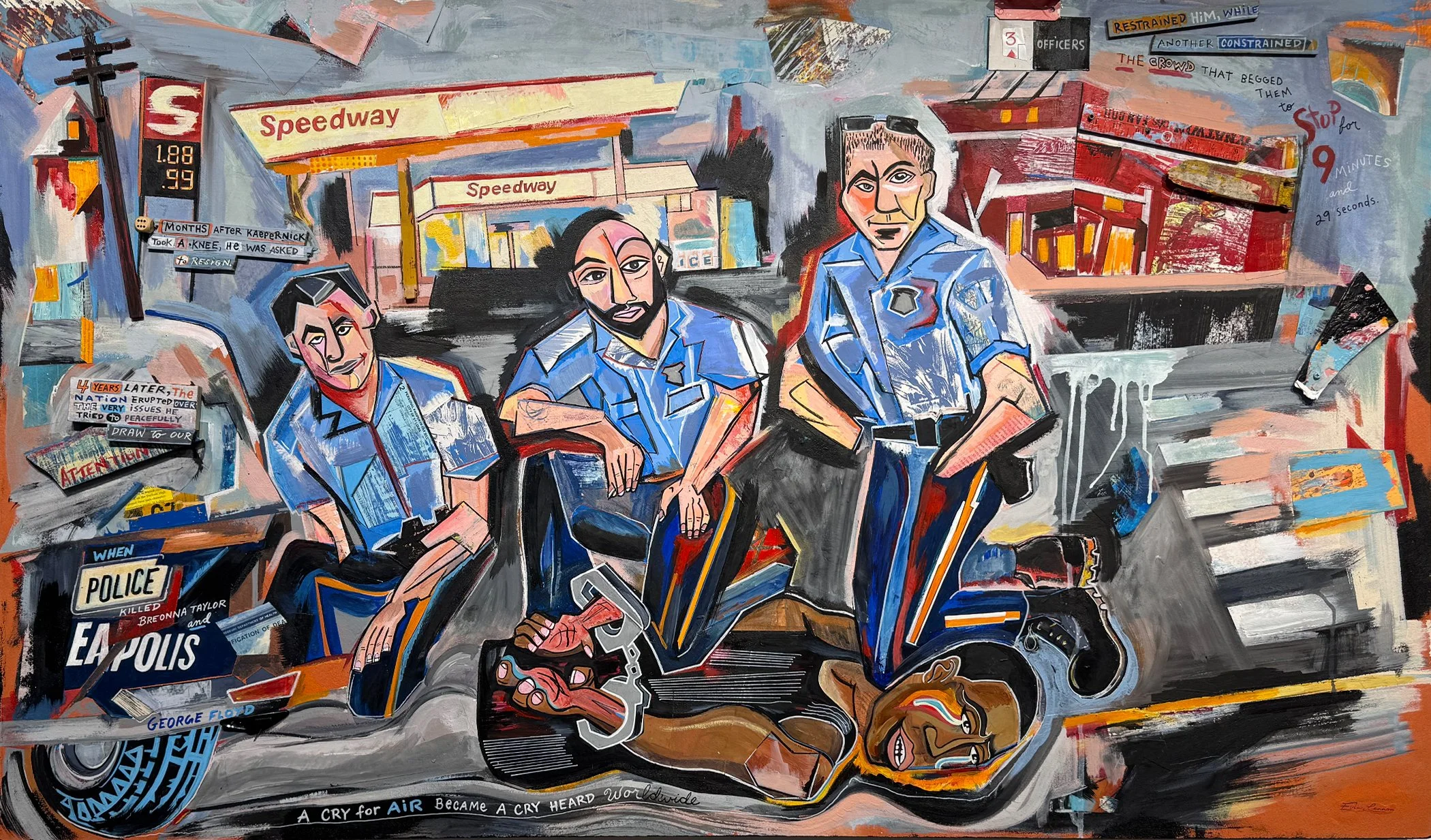
This diptych juxtaposes one of the most recognizable acts of peaceful protest in modern sports with one of the most disturbing images of police violence in American history.
On one panel, Colin Kaepernick and two fellow football players kneel during the national anthem, echoing Kaepernick’s call for America to confront racial injustice and police brutality. Their bowed heads and bent knees embody a tradition of nonviolent dissent rooted in patriotism, conscience, and the belief that the nation can live up to its highest ideals.
On the opposing panel, three police officers kneel while restraining George Floyd during the final moments of his life. The officers’ posture mirrors that of the athletes, yet the meaning could not be more different. One act uses a knee to draw attention to injustice; the other became a symbol of injustice itself.
By visually linking these nearly identical gestures, Taking a Knee asks viewers to consider why one form of kneeling was condemned by many as unpatriotic while another revealed the very realities the protest sought to expose. The work challenges us to examine the distance between symbolism and consequence, protest and power, and to reflect on how society responds to calls for justice before tragedy forces the nation to pay attention.
THE TRUTH GOES MARCHING ON
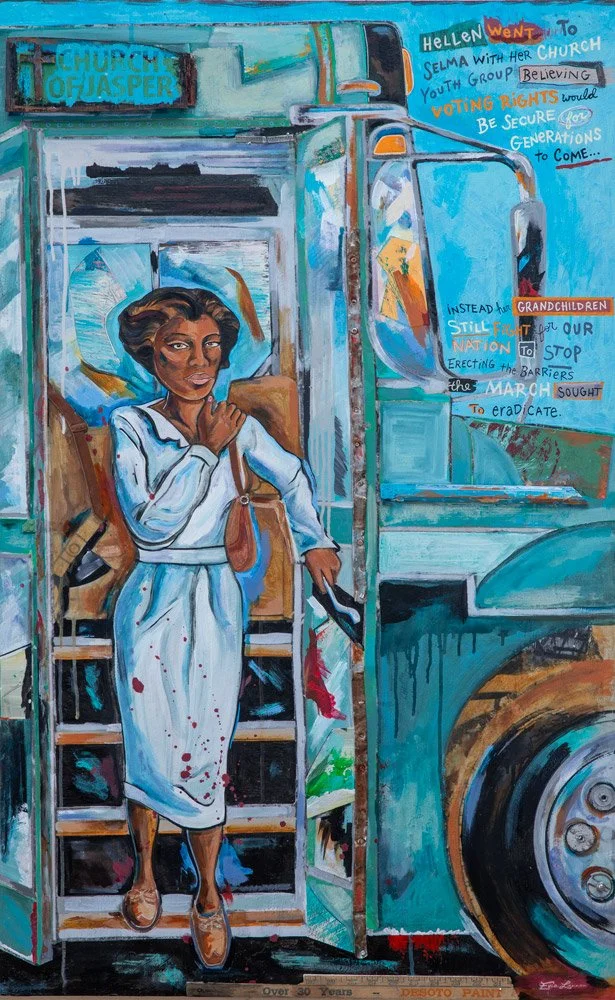
When Hellen described what she had witnessed as a young woman during the march at Selma, I realized any smile she gave me was a miracle. The faith she had in humanity as she sang hymns with her small town’s youth church group on the way to Selma was decimated when they arrived. A wrecking ball was sent through whatever innocence was intact when in her own words, she witnessed “what one individual was capable of doing to another.”
I did end up painting Hellen in the doorway of her bus and was spared painting her in the midst of violence because her youth minister would not let them enter into harm’s way. (I later challenged myself to paint Helen into our painful history when I painted “Selma: a Variation of Guernica”) She carried guilt for not leaving the bus but to me the scars she carried in her soul as a witness was its own casualty. She paid with her innocence for a debt that wasn’t hers.
As a white American I feel sorrow for this bloodstain on our nation’s soul left at Selma. I hope my work elicits a commitment to bringing to fruition the ideals of liberty and justice for all with the same degree of solemnity insisted upon during the words of our anthem and pledge. May we all do the hard work to deliver the rights, young Hellen marched for so many decades ago.
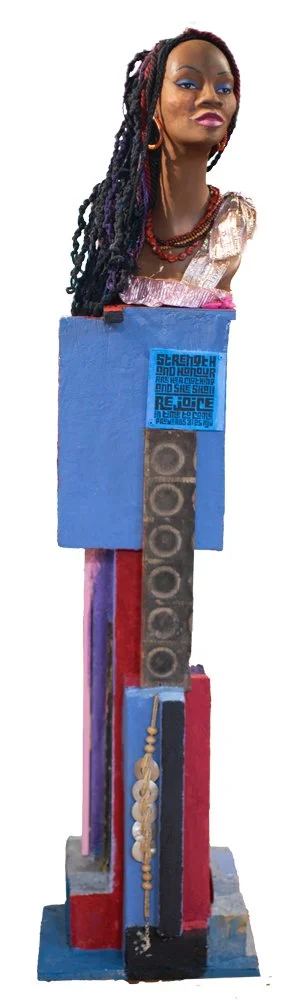
Foundations of Flower Petals
During spring break of her junior year, Davondra Brown waited by the door, excited to leave for vacation with her mom after work. Instead, police arrived to tell her that her mother had been killed in a car accident. As Davondra’s Portfolio teacher at the Arts Magnet High School during her senior year, I watched her navigate college applications, prom, and graduation without her mother beside her.
Davondra honored the foundation her mother gave her through a large self-portrait embedded within the last letter her mother ever wrote to her. She captured its wrinkles, her mother’s wisdom, and even the lipstick kiss left behind, while a wilting rose symbolized her grief.
After earning a full scholarship, becoming a mother herself, and battling lupus, Davondra stood firmly on that foundation and passed it on to her daughters. The flower they made her for Mother’s Day says it all.
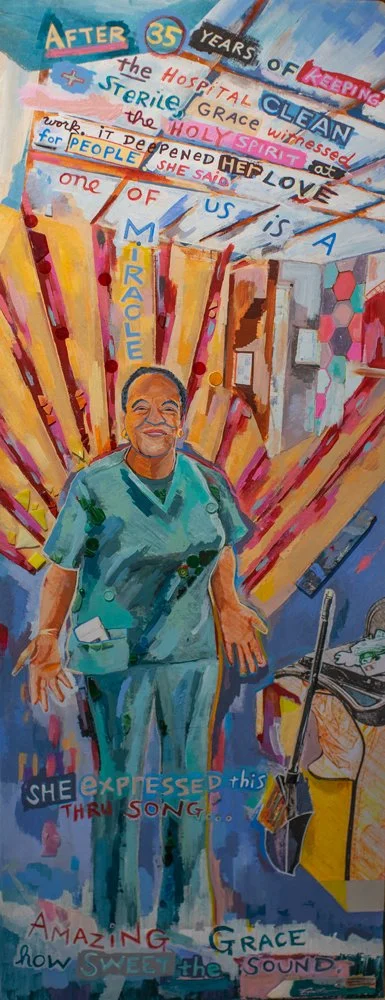
Amazing Grace
The holiest thing I ever saw was through a cracked door: A tiny woman in an employee uniform in an empty patient room lifting up the heavy mattress and cleaning underneath. No one would have been the wiser if she had let her weariness overtake her. We will never know what tragedy was averted by her diligence, what infection did not overtake a patient already fighting for their life. Although the architects had the glory for the grandeur of the building and the doctors for lives saved, the hospital and everyone in it shined because of environmental services.
Grace was on that staff too. She helped me start a choir for the hospital chapel services with her strong vocals and spirit when I was a chaplain. I’ve known her for nearly twenty of the thirty-five years she served. She’s learned a lot from straddling the line between life and death. She’s been a witness to miracles, large and small, but the biggest miracle she says is each of us made in the image of God. I can attest to the miracle one person’s essence can be from knowing my friend, Amazing Grace.
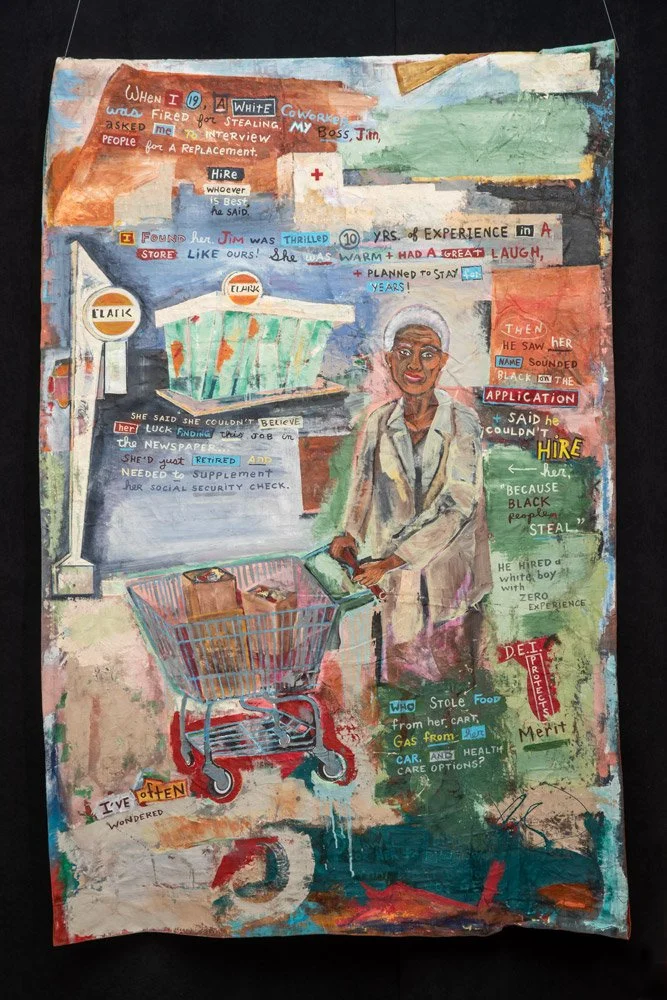
THE PRICE OF A NAME
This piece is not only about a denied job but about the lifelong cost of that denial in terms of optimum accessibility to food, transportation, and healthcare, symbolized by the grocery cart, gas station, and hospital. The monetary toll of job discrimination not only affects quality of life and longevity; it affects emotional and spiritual wellbeing due to the subsequent anxiety and sense of futility.
A widespread misconception is that D.E.I. (Diversity and Equity Inclusion) is designed to give opportunities to women and people of color without the appropriate credentials. In reality, D.E.I. was meant to insure that qualified individuals were not passed over because of their gender, race, or any other identity. This true personal story illustrates D.E.I.’s true purpose, but sadly it isn’t just anecdotal. Studies show that job discrimination remains prevalent.
Comprehensive resumé auditing studies by the University of Chicago Booth School of Business found racial disparities in callback rates. Despite identical credentials, applicants with white-sounding names typically received about 50 percent more callbacks than those with black-sounding names. This gap hasn’t seen meaningful decline over the last 25 years.
The same study also showed lower returns on experience for people of color. While more experience and credentials result in roughly 30 percent more interview callbacks for white applicants, it yields only a 9 percent increase for Black applicants.
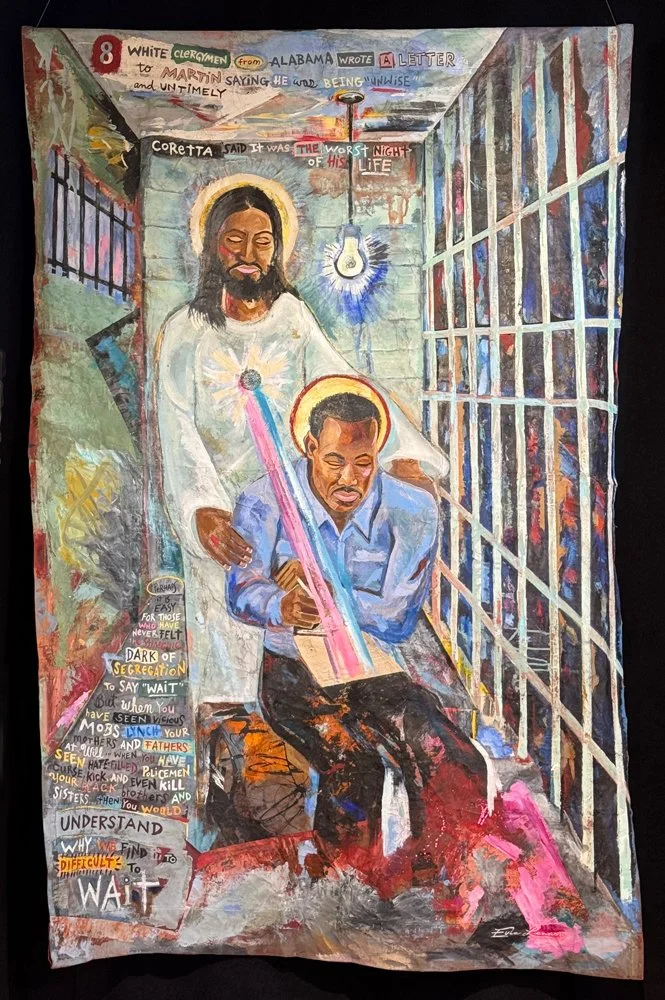
Faith, Justice, and Mercy: Letter from the Birmingham Jail
The first time I painted Dr. King writing his famous Letter from Birmingham Jail, illuminated by the light of Christ’s Sacred Heart, I gave the painting to an administrative assistant at a school where I taught. Later, she told me her eleven-year-old son had asked to hang it in his room. She asked why and he replied, “I didn’t know God was on our side.” His answer was so poignant, I’ve never stopped painting renditions of Christ comforting King in prison.
It became a greater priority to create this image when misinformation purposefully generated about MLK under J. Edgar Hoover’s FBI was recently resurrected to discredit him and gained a great deal of traction.
I was also inspired when actor and activist Courtney B. Vance was discussing the African-American tradition of displaying a photograph of the Rev. Dr. Martin Luther King Jr. next to an image of Christ. Before King’s rise to prominence, W.E.B. Du Bois often occupied that place of honor.
By placing Christ in the jail cell behind Dr. King both literally and metaphorically—I challenge those who use religion to delay or obstruct justice. They do not hold a monopoly on moral authority.
The pink and blue light reflects my Catholic upbringing and references St. Faustina’s vision of Divine Mercy. I still hold fast to the lesson of my youth: seeking justice is not merely acceptable; genuine faith demands justice.